If you have sensitive or reactive skin, you’ve probably seen plenty of skincare labelled:
Gentle. Sensitive. Natural. Hypoallergenic. Fragrance-free.
These words can be helpful, but they don’t always tell you how your skin will respond to the formula inside.
So if you’re looking for fragrance-free skincare for sensitive skin, there’s one important thing to remember:
Fragrance-free does not automatically mean reaction-free.
Sensitive skin is individual, and the complete formula matters far more than one claim on the front of the bottle.

Is fragrance-free skincare better for sensitive skin?
For some people, yes.
If added fragrance or parfum consistently causes redness, itching, stinging or irritation, choosing fragrance-free skincare can remove one potential trigger.
But a fragrance-free product may still contain exfoliating acids, retinoids, alcohols, preservatives or botanical extracts that your skin doesn’t tolerate.
That’s why we encourage you to look beyond the label.
Turn the bottle around and learn what’s actually in it.
Fragrance-free vs unscented: what’s the difference?
These terms can sound similar, but they aren’t always the same thing.
A fragrance-free product generally means fragrance or parfum has not been added specifically to scent the formula.
An unscented product may still contain ingredients used to mask the natural smell of the formulation.
So if fragrance is something your skin is sensitive to, don’t rely on the word “unscented” alone.
Check the ingredient list.
What if skincare has a natural scent?
This is where things become more nuanced.
At Fresh Face Skin, we do not add parfum or fragrance simply to make a product smell nice… Some of our products naturally have an aroma because they contain functional botanical ingredients selected for a reason within the formula.
For example:
-
Reverser Cleanser & Treatment: Contain lime peel oil, primarily included for its naturally refreshing citrus aroma, with additional potential antioxidant properties.
-
AHA & Enzyme Exfoliator: Contains mandarin peel oil, primarily included for its naturally uplifting citrus aroma, with potential supporting antioxidant and skin-conditioning properties.
-
Soother Products & Recovery Mask: Contain chamomile, known for its soothing properties that help calm and comfort the skin.
-
Healer Cleanser & Treatment: Contain tea tree oil, known for its natural antibacterial properties, which also offers a fresh, clean aroma.
-
Barrier Mist: Contains cucumber extract, known for its hydrating and soothing properties, which also offers a refreshing natural aroma.
These ingredients may naturally contribute scent, but they have not been included solely to perfume the product.
That distinction matters.
It also doesn’t mean natural ingredients can never irritate sensitive skin. Some reactive skins may still be sensitive to certain botanical extracts or essential oils.
The ingredient, concentration, purpose and complete formulation all matter.
What other ingredients can sensitive skin react to?
There is no universal list of ingredients every sensitive skin should avoid.
However, if your skin frequently reacts, it can be helpful to look for patterns around:
Fragrance or parfum
If you know added fragrance triggers your skin, avoiding it may be a sensible starting point.
Essential oils and botanical extracts
Natural doesn’t automatically mean non-irritating.
Some skin tolerates these ingredients well. Other skin may not.
Exfoliating acids
AHAs, BHAs and other exfoliating ingredients can be beneficial, but problems may arise when several products in your routine contain them.
Retinoids and highly active formulas
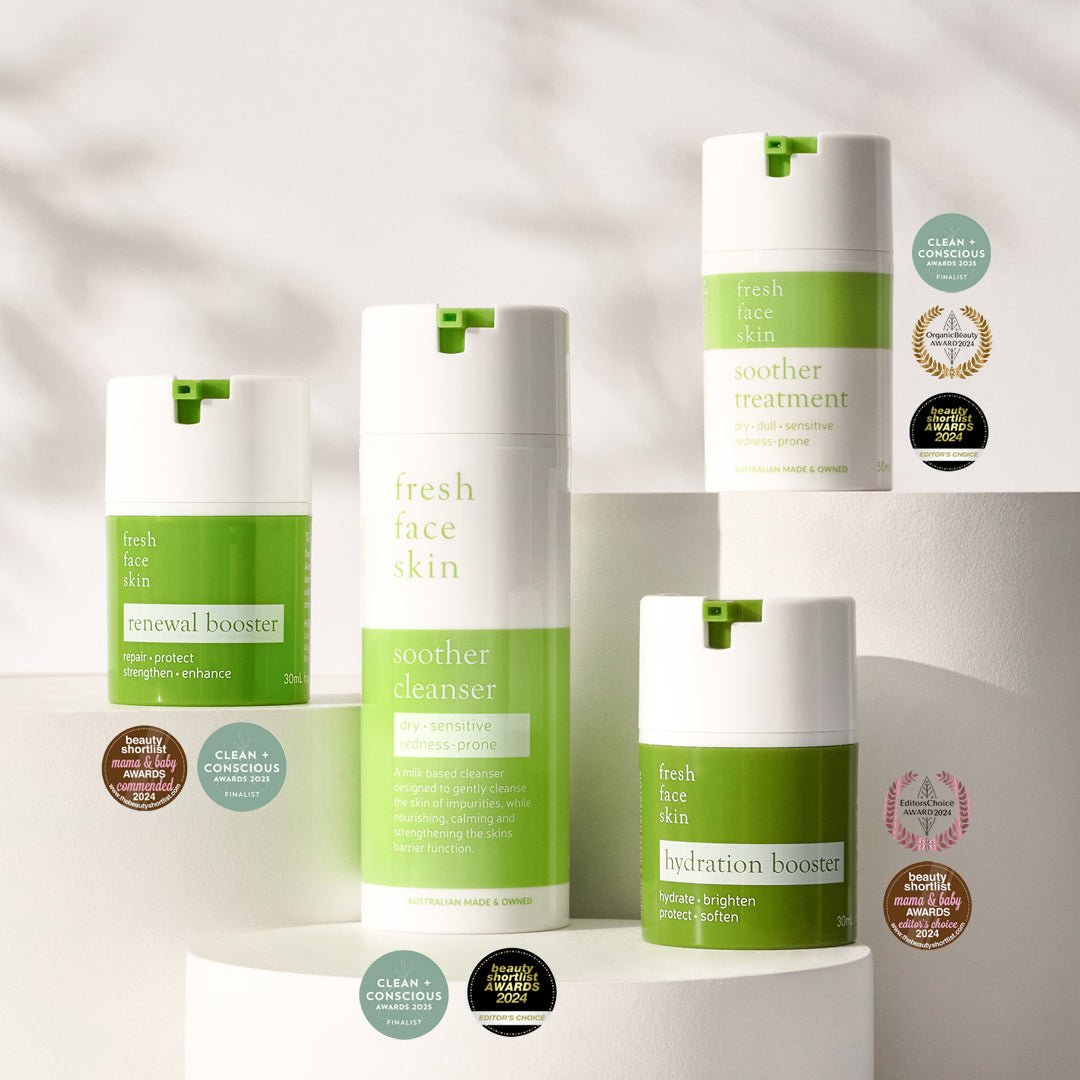
Introducing potent active ingredients too quickly, even those naturally derived, can leave sensitive skin feeling dry, irritated or increasingly reactive. This includes ingredients such as bakuchiol, a plant-derived alternative to retinol found in our Renewal Booster.
Alcohol Denat. (Denatured Alcohol)
Alcohol denat. is commonly used in skincare formulations to help dissolve active ingredients, create a lightweight texture and improve how quickly a product absorbs and dries on the skin. It can also help certain ingredients spread more evenly and enhance their penetration.
However, at higher concentrations, alcohol denat. can strip some of the skin's natural oils and increase moisture loss, potentially leaving sensitive or barrier-compromised skin feeling dry, tight, irritated or more reactive.
It's important to distinguish alcohol denat. from fatty alcohols, such as cetyl alcohol and cetearyl alcohol, which are generally used to soften the skin, improve texture and support a cream's moisturising properties.
Sometimes it’s the whole routine, not one ingredient

One of the most common things we see is people unknowingly using multiple active ingredients across their routine.
Your cleanser may exfoliate.
Your serum may exfoliate.
Your treatment might contain another active that works on cell renewal.
Then your moisturiser stings and gets blamed.
Sometimes the real issue is the combined active load rather than one product.
How should sensitive skin introduce a new product?
Keep it simple.
Introduce one new product at a time, allowing 4-8 weeks to see how your skin responds before adding another, rather than changing your entire routine at once.
If your skin is particularly reactive, patch testing a new product on a small area first - such as your neck, and leaving this on for 12 hours to see how your skin tolerates it - can also help you see how your skin responds before applying it more widely.
If your skin repeatedly becomes inflamed, itchy and irritated when it comes to skincare and introducing new products, we recommend booking a complimentary Skin Check-In with one of our qualified skin therapists. We'll help you better understand your skin, review your product choices and provide guidance on the next steps.
What should sensitive skin focus on?
Rather than searching for one perfect phrase on the bottle, think about what your skin actually needs.
For reactive skin, we generally focus on:
Gentle cleansing
Your skin should feel clean, never stripped.
Barrier support
Support the skin’s protective function rather than continually challenging it.
Moisture retention
Help the skin stay comfortable and hold onto hydration more effectively.
A simple routine
Fewer products can make it easier to identify what is helping or irritating your skin.

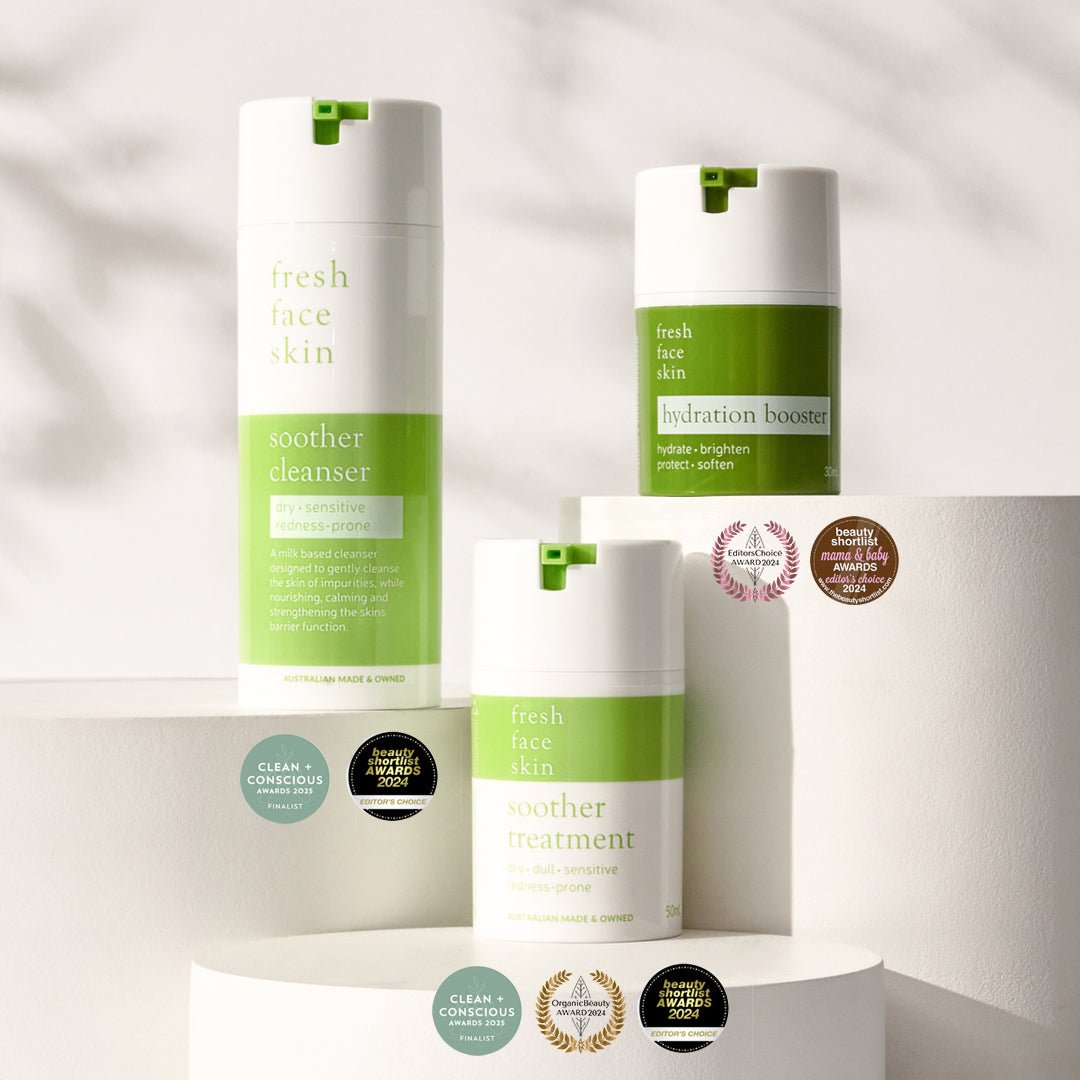
Our Skin Barrier Repair Pack follows this approach, combining Soother Cleanser, Soother Treatment and Recovery Mask in a simple, nourishing routine for sensitive, reactive or barrier-compromised skin.
For ultra-sensitive skin that's highly irritated, inflamed or prone to flare-ups, our Ultra Sensitive Skin Duo takes things one step further by simplifying your routine to just two oil-based products: Soother Pre-Cleanse and Soother Treatment.

The focus is on replenishing your skin's essential oils (lipids) and supporting its protective barrier first, before gradually introducing additional skincare to address other concerns.
For additional lightweight hydration and barrier support, Barrier Mist can be added after cleansing.
So, should sensitive skin always avoid fragrance?
Not necessarily.
If added fragrance consistently triggers your skin, avoiding it makes sense.
But the better question is:
Does this complete formula suit my skin?
Look at the fragrance source, the active ingredients, botanical extracts, cleansing agents and the condition of your skin barrier at the time.
At Fresh Face Skin, every ingredient should have a reason to be there.
And for sensitive skin, the best routine is often not the one with the longest ingredient list.
It’s the one your skin can comfortably tolerate and consistently thrive with, long term.