At Fresh Face Skin, we often say: above all, hydrated skin is healthy skin.
And there’s a reason we place so much importance on hydration. Water is essential to the normal functioning of our skin, particularly the outermost layer, the stratum corneum. When this layer has adequate hydration, it is better able to perform many of the processes responsible for keeping our skin smooth, balanced and resilient.
The skin is our body’s largest organ. But drinking more water doesn’t necessarily mean that all of that water is delivered directly to the skin’s surface.
Our water intake supports the entire body, which is why consistent internal hydration is important. But healthy skin hydration also relies on how effectively the skin is able to retain water and prevent excessive water loss.
This is where supporting the skin both internally and externally becomes so important.

1. Supports healthy skin function
Healthy skin relies on countless cellular processes working together. Adequate water is essential for normal skin function and helps create the environment our skin needs to carry out its natural processes.
When the skin becomes dehydrated, it can begin to look dull, feel tight and show texture and fine dehydration lines more easily.
2. Supports natural desquamation and exfoliation
Desquamation is your skin’s natural exfoliation process, where older surface cells are gradually released to make way for newer cells underneath.
Water plays an important role in the enzymatic processes that allow these older cells to separate and shed normally. When the skin is dehydrated, this natural shedding process may become less efficient, contributing to surface roughness, flakiness and uneven texture.
This is why hydration can make such a noticeable difference to the texture, softness and overall vitality of the skin.
3. Supports your skin barrier and acid mantle
Your skin has a naturally acidic environment known as the acid mantle. Maintaining healthy hydration levels helps support the skin barrier and its protective environment, allowing the skin to better retain moisture and protect against external irritants.
This can help skin feel more comfortable, moisturised and less reactive.
If your skin is feeling more sensitive or reactive than normal, one of the first questions we should ask is: Is my skin adequately hydrated, and is my skin barrier being supported?
How Can You Hydrate Your Skin From the Inside Out?
Alongside consistent water intake, essential fatty acids such as omega-3s can form part of an internally supportive approach to skin health.
Omega-3 fatty acids, found naturally within our diet and through high-quality omega-3 supplements such as Nordic Naturals Ultimate Omega, can help support normal skin barrier function and overall skin health.
Think of it less as simply putting more water into the skin and more as supporting the skin’s ability to hold onto moisture effectively.
Why We Love the Hydrate Me Starter Pack for Dehydrated Skin

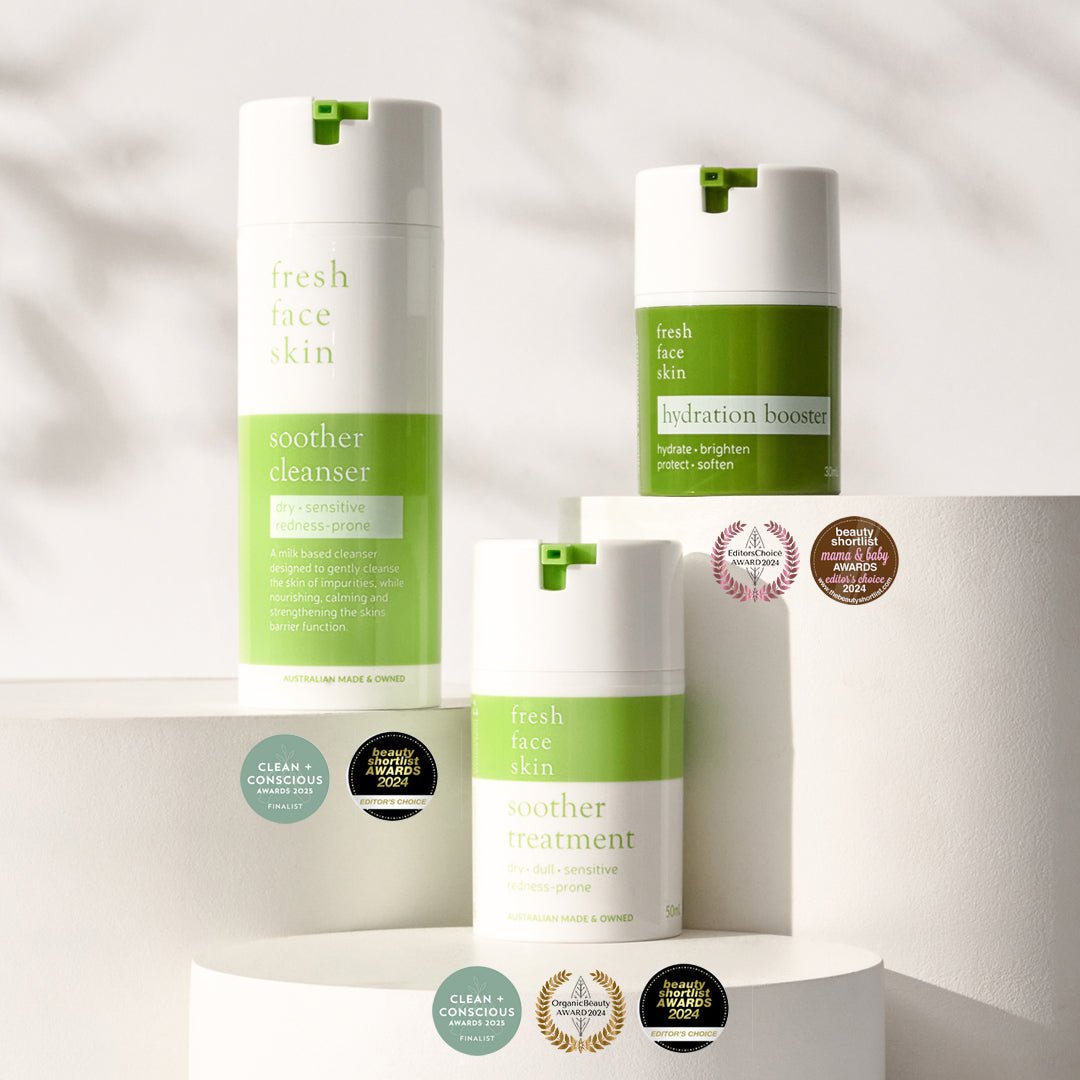
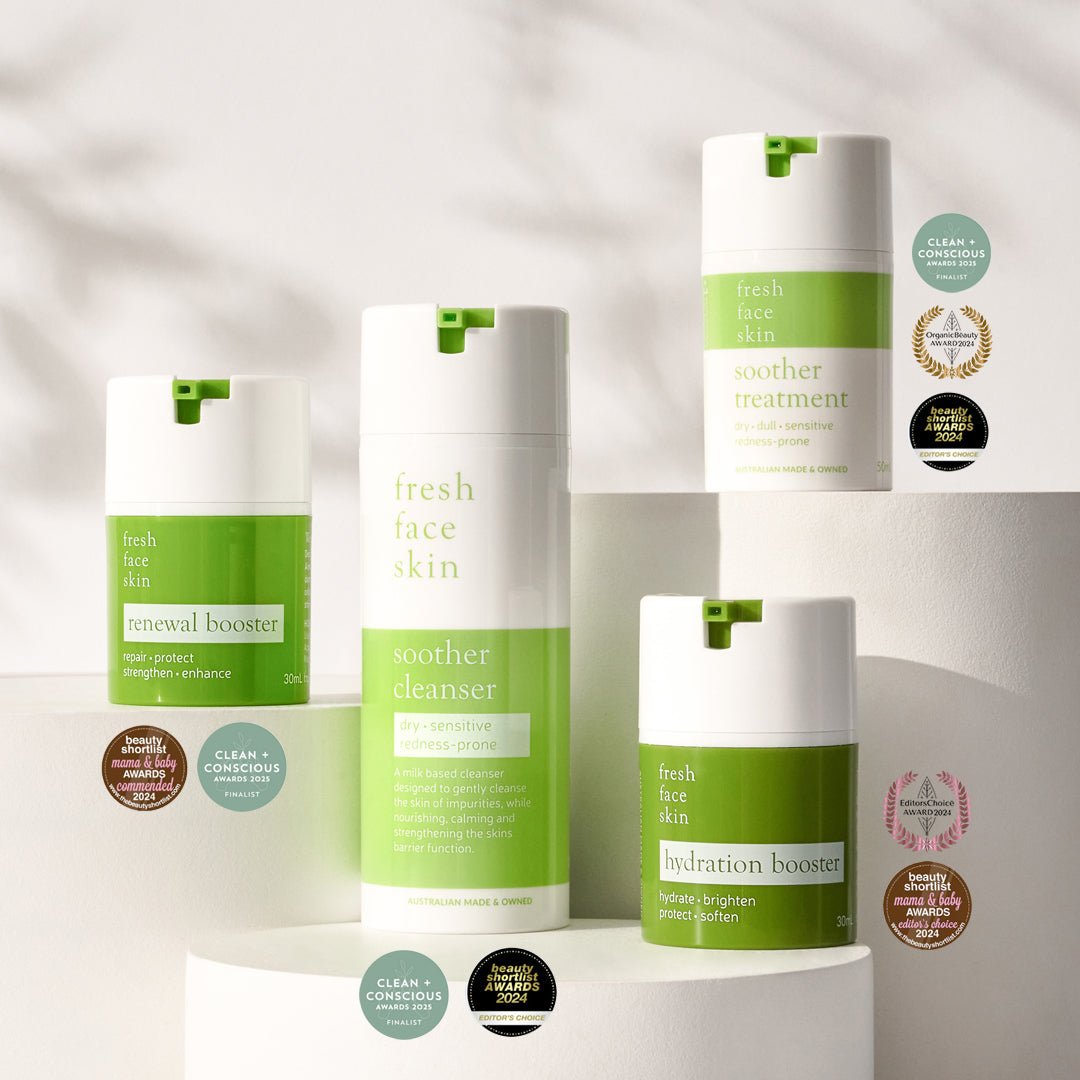
This is exactly why our Hydrate Me Starter Pack has become one of our most popular Fresh Face Skin routines.
Rather than focusing on constantly exfoliating or stimulating the skin, it brings the focus back to two foundations of long-term skin health:
Hydration + barrier support.
By supporting these fundamentals consistently, we create a healthier environment for the skin to do what it naturally does best: renew, regulate, protect and repair.
Because before we focus on perfecting the skin, we need to make sure it has what it needs to function well.
And that begins with hydration.
Frequently Asked Questions About Skin Hydration
How do I know if my skin is dehydrated?
Common signs of dehydrated skin can include tightness, dullness, rough texture, increased sensitivity and fine dehydration lines becoming more noticeable.
Your skin may also feel oily on the surface while still feeling tight or uncomfortable underneath.
What is the difference between dry and dehydrated skin?
Dry skin generally lacks oil, while dehydrated skin lacks water.
This means even oily, combination or congested skin can still become dehydrated.
Dry skin may benefit from more nourishing lipids and oils, while dehydrated skin generally benefits from ingredients and products that help attract, replenish and retain water.
Does drinking water actually hydrate your skin?
Drinking enough water is important for overall health and supports normal skin function, but increasing water intake alone doesn’t necessarily mean your skin will instantly become more hydrated.
Your skin also needs a healthy barrier to help retain moisture and reduce excessive water loss.
This is why we focus on hydration from both directions: internally through consistent water intake and supportive nutrition, and externally through barrier-supportive skincare.
Can oily skin still be dehydrated?
Absolutely. Oil and water are two different things, so your skin can produce plenty of sebum while still lacking water.
Dehydrated oily skin can sometimes feel both shiny and tight at the same time. Supporting hydration without overloading the skin with unnecessarily heavy products can help support a healthier balance.
Why does my skin still feel dry after moisturising?
If your skin still feels dry after applying moisturiser, it may not simply need more oil.
It could also be lacking water or struggling to retain hydration because the skin barrier is not functioning optimally.
This is why layering hydrating products with barrier-supportive ingredients can often be more helpful than simply applying a heavier moisturiser.
What skincare ingredients are best for dehydrated skin?
Look for ingredients that help attract and retain water while supporting the skin barrier.
Some commonly used ingredients for dehydrated skin include hyaluronic acid, niacinamide, ceramides, squalane and barrier-supportive lipids.
The goal is not simply to make the skin feel hydrated temporarily, but to create an environment where it can retain hydration more effectively over time.