If you've experienced eczema, you'll know just how frustrating and uncomfortable it can be. One week your skin feels calm and balanced, and the next you're dealing with dry, itchy, inflamed patches that seem to appear without warning.
But eczema is much more than simply having dry or sensitive skin.
It's a chronic inflammatory skin condition influenced by genetics, immune system activity, skin barrier function and environmental triggers.
At Fresh Face Skin, we believe understanding why your skin is reacting is just as important as knowing which skincare products to use.
Let's explore what eczema actually is, how to recognise it, what can trigger flare-ups and how to build a consistent skincare routine that supports your skin's natural protective barrier.

What is eczema, and why does it develop?
Eczema describes a group of inflammatory skin conditions that cause dryness, itching and irritation.
The most common form is atopic dermatitis, which is often associated with an inherited tendency towards skin barrier dysfunction and altered immune responses.
Genetics can play a significant role in whether you develop atopic eczema.
Some people inherit variations in genes involved in skin barrier function, including the filaggrin gene, which helps maintain the skin's protective outer layer.

Eczema isn't simply caused by dry skin. It's a complex inflammatory condition in which skin barrier health and immune function are closely connected.
How can you tell if you have eczema?
One of the most recognisable characteristics of eczema is the appearance of dry, itchy, inflamed patches of skin.
These patches can vary in shape and size. They may appear round or oval, particularly in discoid eczema, or form larger, less clearly defined areas of inflammation.
Common signs include:
- Dry, rough or flaky patches.
- Redness or darker discolouration, depending on skin tone.
- Persistent itching, sometimes more intense at night.
- Tightness, sensitivity or a burning sensation.
- Cracking, thickening or scaling of the skin.
- Occasionally, small blisters, weeping or crusting during more severe flare-ups.
Where does eczema commonly appear?
Eczema can develop almost anywhere on the body, but certain areas are particularly common.
Inside the elbows and behind the knees: These skin creases are common areas for atopic eczema, particularly in older children and adults.
Around the eyes and eyelids: The delicate skin around the eyes can become dry, inflamed, flaky and sensitive.
Around the mouth: Dryness, redness and irritation can develop around the lips and corners of the mouth, although these symptoms may also indicate other skin conditions.
Neck and chest: These areas may experience itchy, inflamed patches, particularly with sweating, friction or exposure to irritants.
Hands and wrists: Frequent handwashing, detergents and environmental exposure can contribute to dryness, irritation and eczema symptoms.
Not everyone experiences eczema in the same way. Its appearance can change depending on age, skin tone and the type of eczema.
For more education about eczema, dermatitis and sensitive skin, explore our guide to inflammatory skin conditions.
Important: Not every red, round or dry patch is eczema. Other skin conditions can look similar, so a GP or dermatologist should confirm the diagnosis.
What triggers eczema flare-ups?
Eczema is rarely influenced by just one factor.
While genetics and immune function contribute to the underlying condition, both internal and external factors can influence when symptoms become more noticeable.
Internal factors
Stress and the nervous system
Stress can influence immune and inflammatory pathways and is a recognised trigger for eczema flare-ups.
It can also affect sleep and increase the urge to scratch, contributing to further irritation.
Hormonal changes
Some people notice changes in their eczema symptoms during their menstrual cycle, pregnancy or other periods of hormonal fluctuation.
Hormones can influence skin barrier function and immune responses, although their effects vary between individuals.
Immune and inflammatory activity
Atopic eczema involves altered immune signalling that contributes to inflammation within the skin.
This is why moisturising alone may not be enough to manage an active flare-up.
The connection between gut health, inflammation and your skin
Your skin doesn't function independently from the rest of your body.
Your gut, immune system and skin communicate through complex biological pathways, often referred to as the gut-skin axis.
Researchers are exploring how the gut microbiome, which consists of microorganisms living within the digestive tract, may influence immune responses and inflammatory skin conditions, including eczema.
Changes in gut microbial communities have been associated with eczema in some studies, although researchers are still investigating whether these changes contribute to the condition or reflect other underlying factors.
Stress, diet, immune function and overall health can also influence inflammatory pathways throughout the body.
At Fresh Face Skin, we believe in taking a broader approach to skin health, considering both external skincare and internal wellbeing.
For clients interested in learning more about gut health and nutritional support, we also offer Restore You and Cell Charge from Cell Wellness.
These products can be explored as part of a broader wellbeing conversation, although they haven't been established as treatments for eczema or proven to prevent flare-ups.
External factors
Common external triggers include:
- Cold weather and low humidity.
- Indoor heating and dry air.
- Hot showers and excessive washing.
- Fragranced skincare and certain essential oils.
- Harsh soaps, detergents and cleaning products.
- Sweat, overheating and friction.
- Wool and other irritating fabrics.
- Individual environmental allergens.
Understanding your personal triggers can make a meaningful difference to how you manage your skin.
Our guide to seasonal allergies and reactive skin explains how environmental changes can affect sensitivity.
Why can eczema become worse during winter?
For many people, winter is one of the most challenging seasons for eczema-prone skin.
As temperatures drop, the air often becomes drier. Indoor heating can further reduce humidity, increasing the amount of moisture lost from the skin.
When your skin barrier is already compromised, this can contribute to increased dryness, tightness, itching and irritation.
Long, hot showers can make matters worse by removing some of the skin's protective surface lipids.
This combination can make winter a particularly common time for eczema flare-ups.
Our winter skin advice: Focus on maintaining moisture, protecting your skin barrier and reducing unnecessary irritation before dryness becomes more severe.
However, eczema isn't exclusively a winter condition. For some people, summer heat, sweat and humidity are more significant triggers.
Why your skin barrier matters so much when you have eczema
Your skin barrier is the outermost protective layer of your skin.
Its role is to help retain water while limiting the entry of environmental irritants and allergens.
A healthy skin barrier relies on a balanced combination of skin cells, natural moisturising factors and protective lipids, including ceramides, cholesterol and fatty acids.
When this protective structure is compromised, the skin can lose water more rapidly through a process known as transepidermal water loss (TEWL).
Learn more about the signs of a damaged skin barrier and how to support its repair.
This can leave the skin feeling:
Dehydrated and tight.
Dry, rough or flaky.
More reactive to skincare.
Easily irritated by environmental changes.
For eczema-prone skin, barrier care is an important part of ongoing management, even when there isn't an active flare-up.
But it's important to remember that barrier-supporting skincare helps manage dryness and protect the skin; it doesn't replace medical treatment for eczema inflammation.
Why moisturising matters, even when your eczema isn't flaring
One of the biggest misconceptions about eczema-prone skin is that you only need to focus on your skin barrier when it's dry, itchy or inflamed.
In reality, maintaining your skin barrier between flare-ups is just as important.
Your skin's protective barrier relies on a combination of natural lipids, including ceramides, cholesterol and fatty acids, which help retain moisture and protect against environmental irritants.
When this lipid barrier is compromised, moisture can escape more easily, leaving the skin vulnerable to dryness and sensitivity.
This is where consistent moisturising and lipid support become so important.
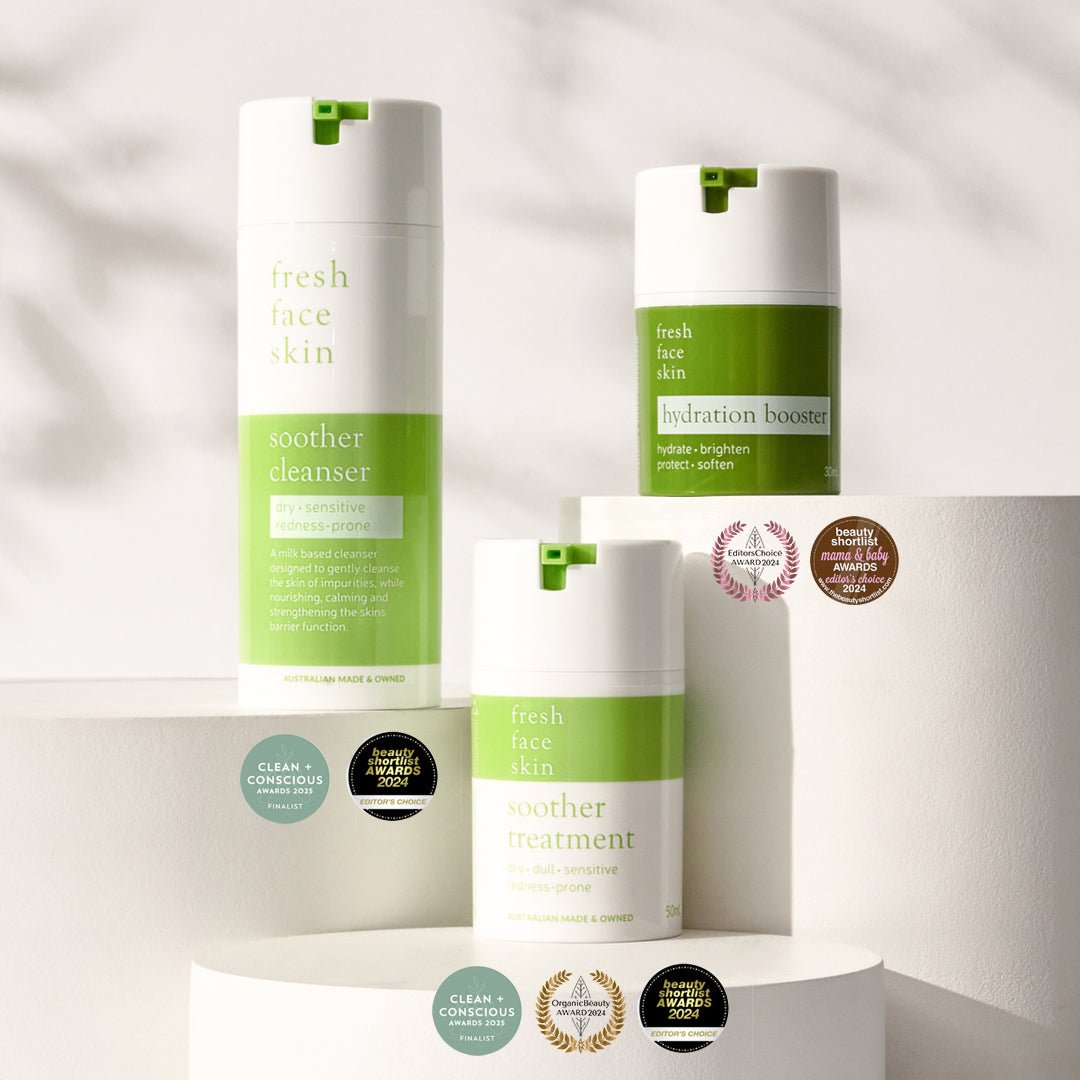
At Fresh Face Skin, our Soother Treatment was developed with dry, sensitive and inflammation-prone skin in mind.

Its nourishing oil formulation is designed to replenish surface lipids, soften the skin and support moisture retention, helping maintain a more comfortable, resilient skin barrier and can be a valuable addition to your daily routine, particularly during colder months when moisture loss can increase.
Remember: Don't wait until your skin feels uncomfortable to start supporting your barrier. Consistency is one of the most important parts of caring for eczema-prone skin.
The best skincare routine for eczema-prone skin
When your skin is inflamed or reactive, a complicated skincare routine can sometimes create more problems than it solves.
Our approach at Fresh Face Skin is to simplify your routine and focus on the foundations of skin health.
Step 1: Cleanse without stripping your skin
Cleansing should leave your skin feeling comfortable, not tight or dry.
Choose a gentle, preferably fragrance-free cleanser that removes daily impurities without unnecessarily stripping the skin's protective oils.
Avoid harsh scrubs, strong foaming cleansers and very hot water.
During an active flare-up, minimise cleansing of affected areas where appropriate and follow your healthcare professional's advice.
Step 2: Understand the difference between hydration and moisture
Hydration and moisturising are closely related, but they serve different purposes.
Hydrating ingredients, such as glycerin and hyaluronic acid, help attract and retain water.
Moisturising ingredients, such as emollients and occlusives, help soften the skin and reduce moisture loss.
For eczema-prone skin, both can be beneficial, but a suitable fragrance-free oil or cream or ointment is generally the most important daily skincare product.
Step 3: Support your skin barrier consistently
Regular moisturising can help reduce dryness and support the skin's protective function.
Apply our Soother treatment at least twice daily and after washing.
Consistency is important, even when your skin feels comfortable.
If you are unsure about product order, see our step-by-step skincare layering guide.
Step 4: Protect your skin from environmental triggers
Consider how your daily habits may affect your skin.
Shorter, lukewarm showers, gentle fabrics, opting for fragrance free fabric softer and washing powders, consistent skin moisturising, while avoiding known irritants can all help reduce unnecessary stress on the skin.
For daytime facial protection, choose a broad-spectrum SPF 50 or SPF 50+ sunscreen that your skin tolerates. Mineral based sunscreens tend to be a better, more tolerable option for eczema skins.
How to choose skincare products for eczema-prone skin
When your skin is sensitive or prone to inflammatory flare-ups, the ingredients you apply matter.
However, this doesn't mean you need to avoid every botanical ingredient or naturally derived formulation.
The most important consideration is understanding the complete formulation and how your individual skin responds.
Fragrance-free versus naturally scented skincare
Added fragrances, including certain essential oils, can trigger irritation or allergic reactions in susceptible skin.
At Fresh Face Skin, our Soother products and Recovery Mask are formulated without added fragrance.
They contain chamomile extract, which contributes a subtle, naturally occurring botanical scent.
Chamomile is valued in skincare for its skin-conditioning and soothing properties, and certain chamomile compounds have demonstrated anti-inflammatory activity in laboratory research.
However, botanical extracts can still cause reactions in individuals with specific sensitivities or allergies.
This is why we always encourage clients with eczema-prone skin to consider their individual ingredient tolerance.
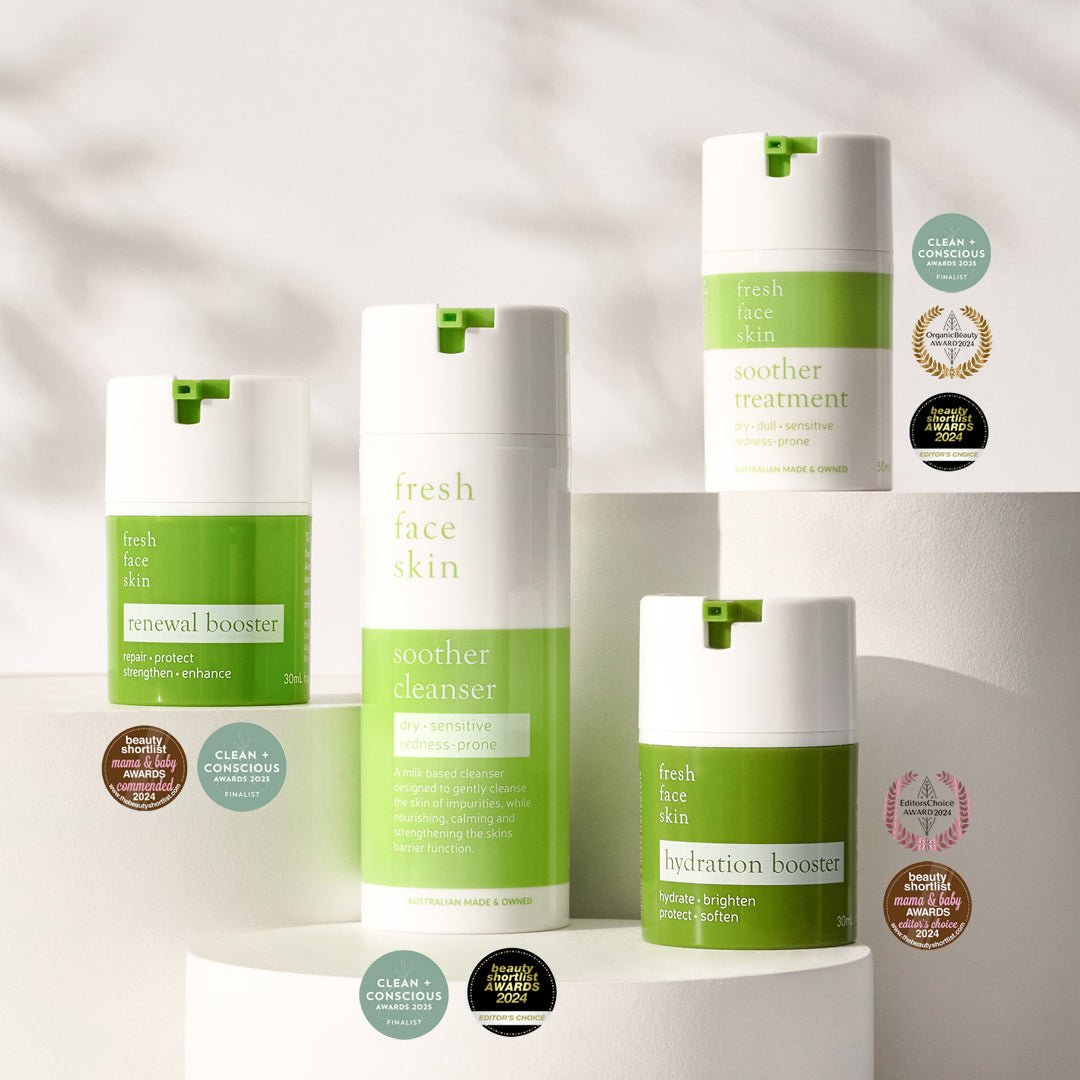
Our favourite barrier-supporting products
Skin Barrier Repair Pack
Our Skin Barrier Repair Pack is designed around the importance of supporting dry, sensitive and compromised skin.
It's a useful option for clients looking to build a consistent barrier-focused skincare routine rather than continually introducing new products.
The goal is to support hydration, moisture retention and everyday skin comfort.
Soother Treatment
Our Soother Treatment is a nourishing facial oil developed to support dry, sensitive and inflammation-prone skin.
Its emollient oil blend helps soften the skin, support surface lipids and reduce moisture loss.
For skin that tolerates the formulation, it can be incorporated into your routine as an additional nourishing step, particularly when dryness and tightness are concerns.
Recovery Mask
Our Recovery Mask is a comforting overnight mask designed to provide additional nourishment and hydration support for dry, stressed skin.
It can be incorporated into a barrier-focused routine when the skin is comfortable with its ingredients.
For eczema-prone skin, introducing new products gradually is important, particularly when the skin is highly reactive.
Hydration Booster
Our Hydration Booster combines two molecular weights of hyaluronic acid to help attract and retain water within the skin's surface layers.
It can be a useful addition for some clients experiencing dehydration and tightness.
We recommend applying it to slightly damp skin before your moisturising products.
While additional hydration can improve the appearance and comfort of dry skin, Hydration Booster is not an eczema treatment.
These products provide cosmetic barrier support rather than medical treatment for eczema. During an active flare-up, particularly when skin is cracked, weeping or intensely inflamed, a bland fragrance-free eczema moisturiser and any prescribed treatment should remain the priority.
What ingredients should you avoid when you have eczema?

There isn't one universal list of ingredients that everyone with eczema must avoid.
However, certain products and ingredients are more likely to cause problems when the skin barrier is compromised.
Fragrance and essential oils: These can trigger irritation or allergic contact dermatitis in susceptible individuals, including when they're naturally derived.
Strong exfoliating acids and scrubs: These may increase discomfort and irritation during flare-ups.
Harsh cleansing agents: Some soaps and surfactants can contribute to dryness and barrier disruption.
Unnecessary active ingredients: Retinoids, exfoliants and other strong skincare treatments may need to be paused during an active flare-up.
An important reminder: Natural skincare isn't automatically safer for eczema. The complete formulation, your individual sensitivities and how your skin responds are what matter most.
What should you do during an eczema flare-up?
During an active flare-up, the priority is to reduce irritation and manage inflammation.
This isn't the time to experiment with multiple new skincare products.
Instead:
- Simplify your routine.
- Use a gentle, fragrance-free cleanser when needed.
- Apply a suitable fragrance-free cream or ointment regularly.
- Avoid known irritants, fragrances and unnecessary exfoliating products.
- Follow your prescribed eczema treatment plan.
Depending on the severity of the flare-up, your GP or dermatologist may recommend topical corticosteroids or other anti-inflammatory treatments.
Seek medical advice if your eczema is worsening, interfering with sleep, becoming painful or showing signs of infection, such as increasing warmth, pus or spreading redness.
Frequently asked questions about eczema
Is eczema genetic?
Atopic eczema often has a genetic component. People with a family history of eczema, asthma or hay fever may be more likely to develop it. However, genetics are only one part of the condition, and eczema can also develop without a known family history.
What does eczema look like on the face?
Facial eczema can appear as dry, itchy, flaky or inflamed patches, particularly around the eyes, cheeks and neck. Redness may be less visible on darker skin tones. Similar symptoms can occur with other conditions, so professional diagnosis is important.
Can stress cause eczema?
Stress doesn't necessarily cause the underlying condition, but it can trigger or worsen flare-ups in people who are already susceptible.
Can hormonal changes trigger eczema?
Yes. Some people experience changes in eczema symptoms during their menstrual cycle, pregnancy or other hormonal transitions, although this isn't universal.
Is eczema caused by poor gut health?
There is ongoing research into the gut-skin connection, but eczema cannot generally be attributed to poor gut health. There isn't enough evidence to recommend routine gut treatments, supplements or restrictive diets as a cure for eczema.
Why is my eczema worse in winter?
Cold temperatures, low humidity, indoor heating and hot showers can increase moisture loss from the skin. This can worsen dryness and itching, particularly when the skin barrier is already compromised.
Can eczema be cured?
Atopic eczema is generally considered a chronic, relapsing condition. Some children experience significant improvement as they grow older, while others continue to experience flare-ups into adulthood. Effective treatment and skincare can help control symptoms.
Can skincare prevent eczema flare-ups?
Consistent moisturising and avoiding known irritants can help support skin barrier function and may reduce the frequency or severity of some flare-ups. However, skincare cannot guarantee that flare-ups won't occur.
Is Soother Treatment suitable for eczema-prone skin?
Suitability depends on your individual sensitivities and the product's complete formulation. Soother Treatment is a cosmetic facial oil designed to support skin nourishment and moisture retention, not a medical eczema treatment. Those with eczema should check ingredients carefully, particularly if they have known botanical sensitivities.
Should I use a serum or moisturiser for eczema?
A suitable fragrance-free cream or ointment should generally take priority. Hydrating serums can provide additional hydration for some people but shouldn't replace protective moisturisers or prescribed eczema treatment.
How often should I moisturise eczema-prone skin?
Generally, at least twice daily and whenever the skin feels dry. Moisturising after bathing and continuing between flare-ups can help maintain the skin's protective barrier.
Can eczema develop for the first time as an adult?
Yes. Although atopic eczema commonly begins in childhood, it can first appear in adulthood. New or persistent rashes should be assessed to rule out other conditions.
Supporting your skin starts with understanding it
If there's one thing I've learnt through more than 12 years of working hands-on with skin, it's that understanding the underlying condition is essential.
Eczema-prone skin doesn't necessarily need more products. It needs an appropriate routine, consistent barrier support and an understanding of the factors contributing to irritation.
At Fresh Face Skin, our Dermal Clinicians can help you better understand your skin's hydration needs, barrier function and everyday skincare routine.
Explore our Skin Barrier Repair Pack, discover Soother Treatment and Recovery Mask, or speak with our team for personalised skincare guidance.
For eczema diagnosis, persistent flare-ups or medical treatment, always consult your GP or dermatologist.
About the author
Amelia Goff | Founder of Fresh Face Skin & Dermal Therapist
With over 12 years of hands-on experience in skin health, Amelia founded Fresh Face Skin to make effective, barrier-focused skincare simpler and more accessible. Her approach centres around education, understanding individual skin concerns and supporting long-term skin health.
References and further reading
Eczema Association of Australasia - How to Choose Skincare Products for Eczema
Eczema Association of Australasia - Eczema Skincare Routine
Healthdirect Australia - Eczema: Symptoms, Causes and Treatment
Disclaimer: This article provides general skincare education and does not replace professional medical advice, diagnosis or treatment. Eczema is a medical condition that may require treatment from a qualified healthcare professional.